
As a professional butterfly valve manufacturer, ZFA offers OEM services to clients whose needs go beyond standard butterfly valve offerings.
A manufacturer with genuine OEM capabilities does far more than simply affix a client's logo to existing products; it must be able to interpret client requirements, drawings, and technical data to deliver a comprehensive OEM service—encompassing product design, mold development, manufacturing, quality control, pressure testing, branding, packaging, and final delivery.

1. OEM Begins with Client Needs
The first step in any OEM valve project is to clearly understand exactly what the client requires.
1.1 Client-Provided Drawings
If you already possess a mature butterfly valve design and simply need a manufacturer, ZFA can produce the valves according to your drawings and technical specifications.
Clients may provide:
* Existing valve drawings: Including material requirements, applicable standards, dimensions, etc.
* 2D or 3D CAD files
* Technical specifications
* Physical samples
* Performance requirements
* Branding or logo requirements
1.2 New Products
For new products, ZFA can conduct technical evaluations regarding the butterfly valve's structure, materials, dimensions, connection types, seat design, and actuation methods based on your requirements.
The goal of OEM manufacturing is not merely to "produce according to drawings," but to ensure the design is viable and can successfully pass through subsequent production and testing stages.
2. Customized Butterfly Valve Design
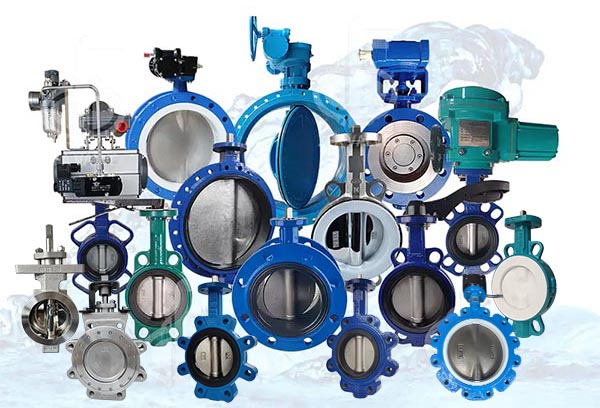
Different applications impose varying requirements on valve structures. OEM butterfly valves can be customized based on the client's piping conditions, installation requirements, and specific operating environments. Available product configurations include:
2.1 Connection Types:
* Wafer-style butterfly valve
* Flanged butterfly valve
* Lug-style butterfly valve
* grooved-style butterfly valve
2.2 Structural Designs:
* Concentric (centered) butterfly valve
* Double-offset butterfly valve
* Triple-offset butterfly valve
2.3 Actuation Methods:
* Manual butterfly valve (lever/worm gear)
* Pneumatic butterfly valve
* Electric butterfly valve
2.4 Case Study
The valve body, disc, stem, seat, connection dimensions, actuator mounting method, and other components can all be configured according to project requirements.
For a UAE client's seawater desalination system, we initially recommended a duplex steel disc and PTFE seat due to the corrosive nature of the medium. However, for subsequent applications involving general freshwater treatment, drinking water, or RO permeate transport, a stainless steel disc and EPDM seat (WRAS-approved EPDM for drinking water) could be selected; this approach meets operational needs while reducing costs.
3. Production Based on Customer Existing Drawings
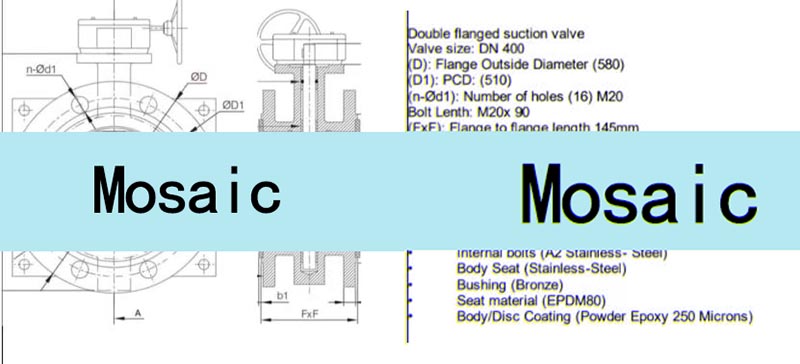
OEM does not imply that ZFA's standard specifications and dimensions must be used; if you already possess a mature product design, ZFA can manufacture the product according to your drawings.
Customization options include:
* Face-to-face dimension
* Flange dimensions
* Body dimensions
* Disc structure
* Stem dimensions
* Seat structure
* Actuator mounting dimensions
* Material combinations
* Pressure rating
* Surface treatment
* Product marking
Naturally, if the design differs significantly from existing products, new mold development may be required. This step follows the exchange of drawings between ZFA and the client, a technical assessment, and confirmation of the required dimensions, tolerances, and structural details.
4. Mold and Sample Development
As mentioned above, for fully customized butterfly valves, existing molds may not meet the client's requirements. In such cases, the project proceeds to the mold development stage, where ZFA develops new molds based on the client's design specifications.
Once the mold is completed, samples are produced and undergo dimensional and functional verification. The typical development process is as follows:
Customer Drawings → Mold Development → Sample Production → Sample Inspection → Customer Approval → Mass Production
This approach allows for the early detection of potential issues prior to mass production, thereby reducing the risk of subsequent modifications and rework.
5. Flexible Material Selection
Material selection is a crucial aspect of OEM valve manufacturing.
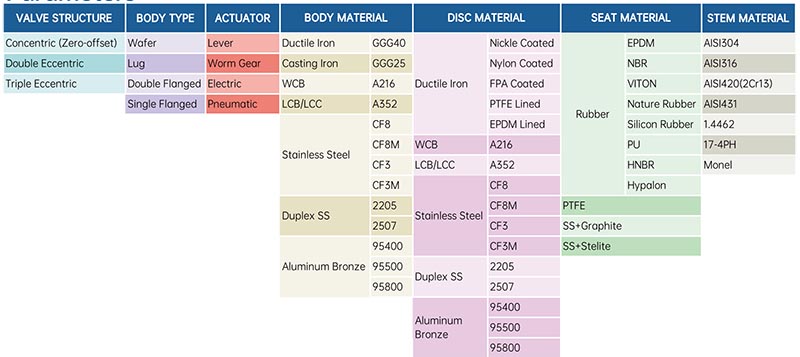
Depending on the specific application, ZFA offers various material combinations for valve bodies, discs, stems, and seats.
5.1 Valve Body Materials
Valve body materials are generally selected based on pressure-bearing capacity, medium corrosiveness, temperature, and mechanical strength.
* Ductile Iron
* WCB Carbon Steel
* LCB/LCC
* CF8 Stainless Steel
* CF8M Stainless Steel
* Other materials customized to project requirements
5.2 Valve Disc Materials
Valve disc materials are generally selected based on medium corrosiveness, erosion/wear resistance, strength, and temperature.
* Ductile Iron + Coating
* WCB
* CF8
* CF8M
* CF3M
* Duplex Stainless Steel (e.g., 2205, 2507)
* Aluminum Bronze
* Titanium
* Lined Discs
5.3 Valve Seat Materials
Valve seat materials are generally selected based on chemical compatibility with the medium, temperature, pressure/differential pressure, sealing requirements, and wear resistance.
* EPDM
* NBR
* FKM
* PTFE
* RPTFE
* Silicone Rubber
* Hypalon
6. CNC Machining
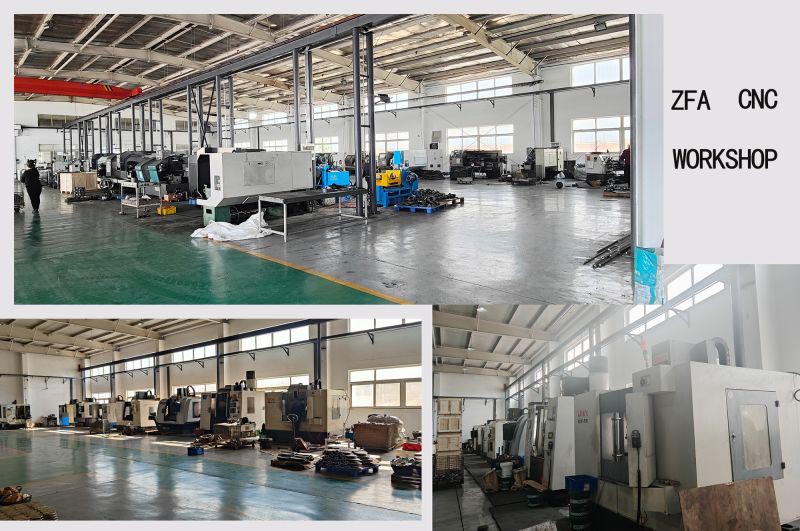
ZFA utilizes CNC machining processes for key valve components such as bodies and discs. Machining operations include, but are not limited to:
* Valve body dimensions
* Disc thickness and profile
* Stem bore
* Shaft bore
* Flange dimensions
* Sealing surfaces
* Connection dimensions
* Actuator mounting surfaces
Precision machining is a critical stage in OEM production; it determines dimensional accuracy, as deviations can impact sealing performance, operating torque, or on-site installation. Therefore, critical dimensions are inspected after each machining stage in the CNC process, rather than waiting until the final inspection to discover issues.
7. Pressure and Sealing Tests
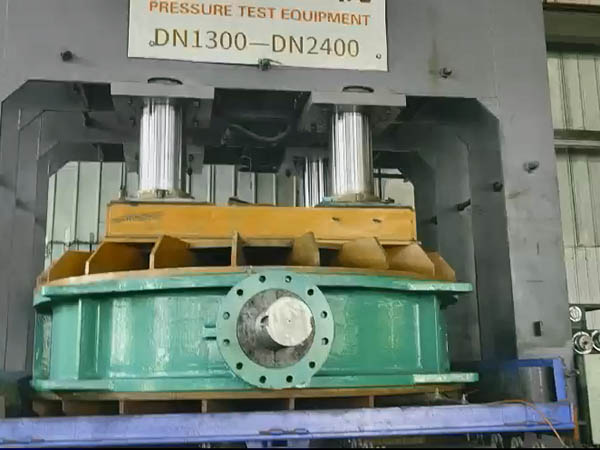
Valve testing is an indispensable part of OEM production.
Based on parameters such as design pressure and operating pressure specified by the client, and in accordance with inspection standards like API 598, ISO 5208, or EN 12266-1, ZFA conducts valve body strength tests and sealing tests to verify pressure-bearing capacity and sealing performance.
Of course, OEM clients may also specify reasonable testing requirements in the product technical specifications in advance, going beyond standard tests.
8. Quality Control from Raw Materials to Finished Products
OEM production cannot rely solely on the inspection of finished products.
ZFA implements quality control throughout the entire production process, including:
Raw Material Inspection: Raw materials and components are inspected before entering production. Depending on project requirements, material specifications, dimensions, appearance, and relevant documentation are verified.
In-Process Quality Control: Monitoring is conducted during key production stages, covering machining dimensions, assembly status, component fit, and other critical process parameters.
Finished Product Quality Control: Final inspections are performed after valve assembly, covering dimensions, appearance, operational performance, and pressure testing.
Pre-shipment Inspection: Before shipment, products are checked against the order for specifications, quantity, markings, packaging, and relevant documentation.
9. OEM Branding and Marking
OEM manufacturing can also include customization of product branding and markings.
Markings such as the logo, material, DN, PN, and flow direction can typically be cast directly onto the valve body; alternatively, custom nameplates can be used.
This allows distributors and valve brands to sell products under their own brand names and maintain consistent product identification across their entire product line.
For companies that already possess sales channels but wish to outsource valve production, private-label OEM manufacturing is a prevailing trend.
10. Customized Packaging and Technical Documentation
Packaging can also be customized according to client requirements, including:
* Shipping marks
* Wooden crate packaging
* Bubble wrap packaging
* Foam packaging
* Material certification documents
* Inspection documents
Proper packaging minimizes damage to machined surfaces, sealing components, coatings, and connection points during transportation. 11. Why choose ZFA for OEM valve manufacturing?
The value of an OEM supplier lies in more than just the ability to manufacture valves.
Customers also require a manufacturer capable of handling technical communication, product customization, quality control, and long-term mass production.
ZFA offers:
* Over 20 years of experience in butterfly valve manufacturing
* In-house production capabilities
* CNC machining capabilities
* Valve assembly capabilities
* Pressure and sealing testing capabilities
* A wide range of material combinations
* Custom product development capabilities
* OEM and private-label production capabilities
* Technical support
* Custom branding and packaging services
11. Conclusion
A successful OEM valve project involves far more than simply adding a customer's logo to a standard valve.
From seamless discussions regarding details—including drawing reviews, product design, mold development, and material selection—to machining, assembly, testing, branding, packaging, and final delivery, every step impacts the quality and reliability of the finished product.
Post time: Aug-26-2026