
Butterfly valves are simple in structure and easy to operate. However, in actual operation, under long-term operation or improper installation and maintenance, the valve plate is prone to failure to close. This directly affects the sealing performance and operational safety of the pipeline system, and in severe cases, may lead to media leakage, abnormal pipeline pressure, equipment damage, or even system shutdown. According to valve industry statistics, approximately 30%-40% of butterfly valve failures are related to closing problems.
This article, based on practical engineering experience, details several common reasons why butterfly valve plates fail to close and provides targeted solutions.
1. Brief Description of the Butterfly Valve Plate Closing Principle
The basic principle of butterfly valve sealing is that the valve plate and valve seat form a tight contact, cutting off the fluid passage at both ends of the pipeline.
Therefore, when the butterfly valve plate rotates to the closed position:
The outer edge of the valve plate forms a sealing contact with the valve seat.
Sealing is achieved through elastic deformation (soft seal butterfly valve) or metal fit (hard seal butterfly valve).
Therefore, any factor that affects the valve plate's rotation to the correct position or the sealing contact will cause the valve to fail to close or not close tightly.
2. Common Reasons Why Butterfly Valves Fail to Close
2.1 Foreign Object Blockage in the Pipeline (Most Common)
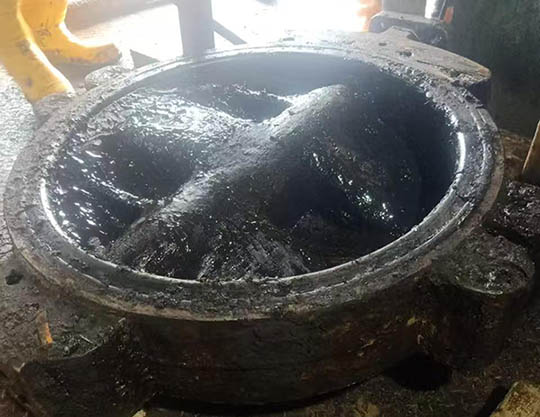
-Symptoms: The valve gets stuck after closing to a certain position. The torque of the manual or electric actuator increases significantly. The actuator makes abnormal noises during operation.
-Causes: Welding slag, rust, stones, fibers, mud, sand, and other impurities enter the valve cavity, especially after new installation or maintenance. Scale and media crystals (such as precipitates in chemical media) will appear after the system has been running for a period of time.
-Solutions: Purge or flush the pipeline before installation. Slightly open the valve and repeatedly open and close it several times to flush it with the medium (do not force it to close, as this may damage the valve plate). 1. Disassemble the valve or open the pipeline to remove foreign objects.
Install filters at critical locations upstream of the pipeline and regularly drain sewage.
2.2 Valve seat has deposits, damage, or aging.
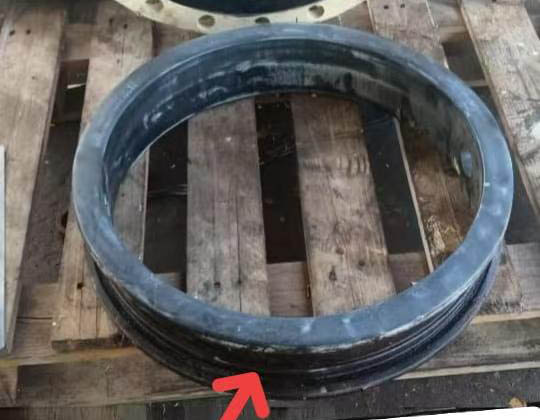
-Symptoms:
The valve plate can close, but leakage exists.
The sealing surface shows obvious wear, cracks, aging, or deformation.
The sealing surface has scale or crystals attached.
-Causes:
The medium water is hard.
The medium contains sand or other impurities that scratch the sealing surface.
The number of opening and closing cycles exceeds the safe service life.
Long-term use leads to rubber aging.
Chemical corrosion (especially materials other than PTFE).
High temperature causes deformation.
-Solutions:
Clean the valve regularly.
Replace the valve seat (replaceable valve seats are more convenient).
Select a more corrosion-resistant and scale-resistant material (such as PTFE).
Control the operating temperature.
Repair the sealing surface by welding or grinding (applicable to hard-seal butterfly valves).
2.3 Valve plate deformation or wear.
-Symptoms:
The valve cannot fully fit the valve seat.
Local leakage.
-Causes:
Insufficient material strength, coupled with long-term erosion (particulate media). 1. **Media Corrosion**
**High Pressure Differential Impact**
**Edge Parts of Coated Valve Plates, Rubber-Coated Plates, etc., Peeling Off**
-Solutions:
Replace the valve plate or recoat.
Select a higher strength material (e.g., stainless steel, duplex steel).
Improve operating conditions (reduce flow rate or pressure shock).
2.4 Valve Stem (Shaft) Misalignment or Bending
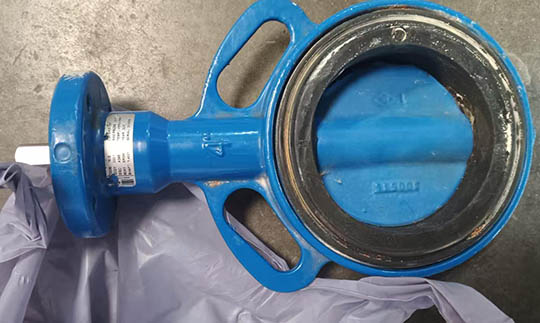
-Symptoms:
Valve plate rotation is not smooth, causing jamming.
Incomplete closure or eccentricity.
-Causes:
Improper installation leading to uneven stress.
Fatigue deformation due to long-term operation.
External impact.
Aging packing.
Loose or broken pins (for pin-equipped valve plates).
-Solutions:
Replace the valve stem.
Inspect bearings or bushings.
Realign and reinstall.
2.5 Insufficient Actuator Torque
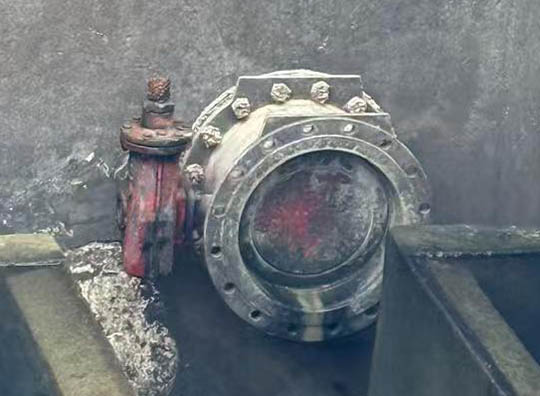
-Applicable to:
Electric/Pneumatic Butterfly Valves
-Symptoms:
Valve stops when approaching the closed position.
Electric actuator overload protection activates.
-Causes:
System pressure is higher than the expected pressure at the time of purchase when closing the valve (exceeding the safety factor). 2.6 Insufficient Actuator Torque
Actual valve torque exceeds theoretical value
Long-term inactivity of valves can lead to increased frictional torque due to corrosion and bearing wear.
-Solutions:
Replace with a higher torque actuator
Add a speed reducer (worm gear)
Regular maintenance to reduce frictional resistance
Clean rust and apply lubricant
Replace bearings to ensure smooth valve stem rotation
2.6 Incorrect Limit Setting (Common in Electric Actuators)
-Symptoms:
Actuator stops prematurely
Valve plate not fully closed
-Causes:
Improper adjustment of limit switch
Factory settings not recalibrated
-Solutions:
Readjust limit switch
Calibrate fully open/fully closed positions
Perform adjustments according to the instruction manual
2.7 Valve Body or Seat Deformation
-Symptoms:
Inability to close tightly even after initial installation
Uneven contact or misalignment between valve plate and seat
-Causes:
Uneven stress on flange bolts
Pipe misalignment causing compression
Improper operation, forced closure causing valve plate deformation
-Solutions:
Tighten bolts evenly in a diagonal sequence.
Ensure pipe coaxiality.
Use positioning tools for installation.
2.8 Temperature Changes Causing Seizure
-Phenomenon:
Difficulty in operation under high or low temperature environments.
-Cause Analysis:
Thermal expansion and contraction causing changes in the fit clearance.
Different material expansion coefficients.
-Solutions:
Select heat-resistant materials.
Leave sufficient installation clearance.
Avoid rapid changes in extreme temperatures.
3. Quick Troubleshooting and Handling Steps
3.1 Troubleshooting
When encountering a "cannot close" problem, troubleshoot in the following order:
a. On-site observation: Record valve opening, leakage location, and actuator indication.
b. Manual operation: Check if rotation is smooth, check actuator function, etc.
c. Disassembly and inspection preparation: Close upstream and downstream valves, depressurize, disassemble the valve, and check for foreign objects, damaged sealing surfaces, etc.
d. Measuring tools: Use a feeler gauge to check the sealing clearance (>0.1mm requires treatment), and a torque meter to test the actuator output.
e. Professional Testing: High-Pressure Leak Test (according to GB/T 13927 standard).
3.2 Handling
a. Safety First: Cut off the medium and take protective measures.
b. Cleaning → Adjustment → Replacement → Reset → Pressure Test.
4. Preventive Measures (More Important Than Repair)
Pipelines must be flushed before installation.
Regular maintenance and lubrication.
Appropriate selection (material + torque).
Avoid overpressure and overtemperature operation.
Establish a patrol inspection system.
For large-diameter butterfly valves, a bypass valve can be installed to reduce water hammer impact during closure.
5. Summary
Butterfly valves that cannot close can essentially be attributed to three main categories of problems:
- Jamming (foreign objects, scale)
- Structural problems (valve plate, valve seat, valve stem)
- Drive problems (actuator, limit switch, torque)
By systematically checking each item, 90% of the problems can be quickly located and resolved.