
As the core components of a butterfly valve, the method of connection between the butterfly disc (plate) and the stem (valve shaft) directly determines the valve's sealing performance, structural strength, service life, and ease of maintenance.
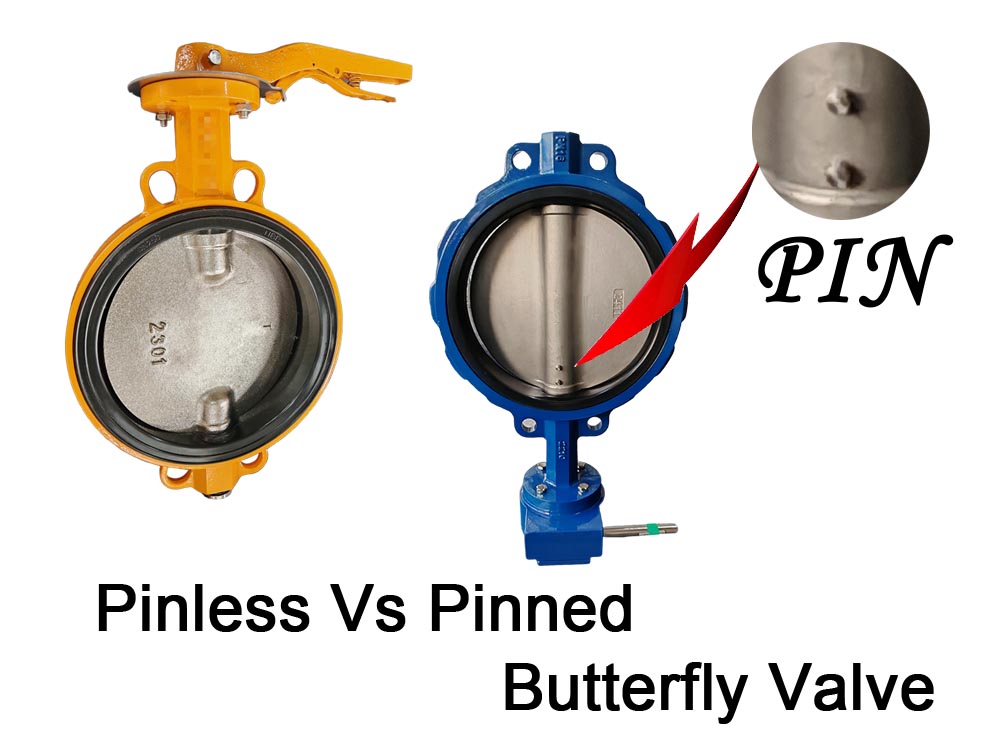
Within the valve industry, "pinned butterfly valves" versus "pinless butterfly valves"—along with "through-shaft" versus "split-shaft" designs—represent the two most frequently discussed pairs of design concepts.
This article will focus on this subject to systematically outline the differences between these two types.
1. Definitions and Structural Differences: Pinned vs. Pinless Butterfly Valves
1.1 Pinned Butterfly Valves
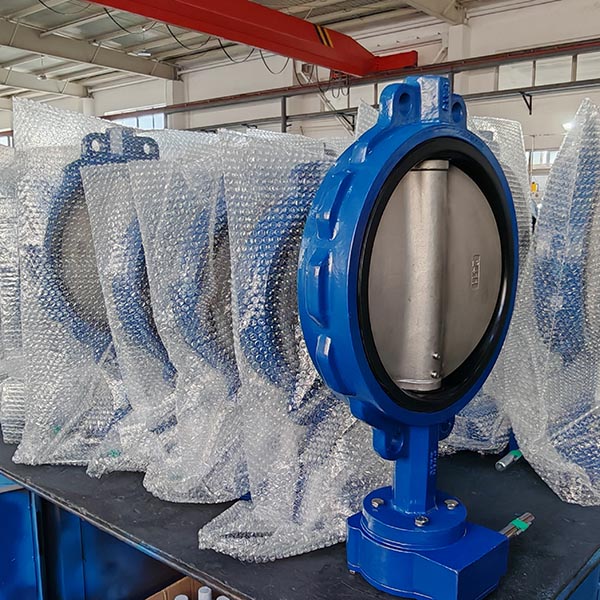
The core characteristic of pinned butterfly valve design lies in the fixed connection established between the disc and the stem through the use of pins (typically cylindrical or tapered pins). These pins pass through a central hole in the disc and a corresponding position on the stem; they are pressed in using a hydraulic press or driven in manually to form a rigid connection.
The torque output by the actuator is applied to the stem and subsequently transmitted to the disc via the pins, thereby enabling the butterfly valve's 90-degree opening and closing motion.
This design predates the emergence of pinless butterfly valves; it benefits from mature manufacturing processes and constituted the mainstream structural design for early butterfly valves. Visually, the most distinctive feature of a pinned butterfly valve is the visible protrusion of the pin heads on the surface of the disc.
1.2 Pinless Butterfly Valves
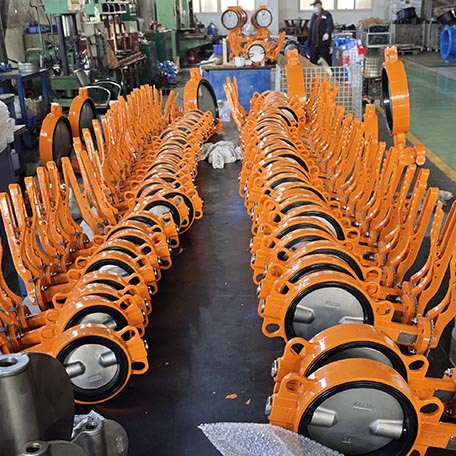
The pinless butterfly valve design completely eliminates the traditional pin-based connection. The lower end of the valve stem is machined to feature a non-circular cross-section (such as a D-shape, square, hexagon, or specialized keyway) and is inserted directly into the central bore of the disc. The connection is secured through methods such as interference fits, circlips, threaded locking mechanisms, or torque transmission via keyways.
Torque transmission relies on the geometric interlocking of shapes combined with frictional forces, thereby obviating the need for additional pins or through-holes. This design eliminates the pin hole—a potential point of leakage—resulting in a more structurally integrated assembly.
1.3 Structural Differences
From a structural perspective, the fundamental difference between the two lies in their torque transmission mechanisms: the pinned design relies on "penetrating mechanical fixation," whereas the pinless design relies on "geometric profiling combined with precision fitting." The pinned structure is simpler and requires a lower threshold of manufacturing expertise; conversely, the pinless design demands higher precision in CNC machining, resulting in higher manufacturing costs.
2. Comparison of Advantages and Disadvantages
2.1 Pinned Butterfly Valves
2.1.1 Advantages
Reliable connection; strong resistance to torsion and impact; suitable for applications involving frequent operation and high torque.
Simple structure; low manufacturing cost.
Good stability; the valve disc is not prone to displacement.
2.1.2 Disadvantages
Prone to corrosion and leakage at the pinholes (fluid media may penetrate even the smallest gaps).
Media infiltration may lead to pin shaft fracture.
Difficult to maintain; the pin shaft requires specialized tools for removal and replacement, making the process complex.
2.2 Pinless Butterfly Valves
2.2.1 Advantages
Excellent sealing performance; eliminates the potential leakage risk associated with pinholes; an ideal choice for clean-service applications and situations requiring high sealing integrity.
Convenient maintenance; easy assembly and disassembly; low repair costs.
Smooth valve disc surface; low flow resistance; good self-cleaning properties.
Eliminates the risk of corrosion through pinholes, resulting in a long service life.
2.2.2 Disadvantages
Relatively limited connection strength; prone to wear and loosening under high-torque or high-pressure conditions.
Requires high manufacturing precision; manufacturing costs are relatively higher.
After prolonged operation, wear on the mating surfaces may compromise the positioning accuracy of the valve disc.
3. Application Scenarios
3.1 Recommended Applications for Pinned Butterfly Valves
Conditions involving high pressure, high torque, and frequent operation (e.g., petrochemical, metallurgy, and power generation industries).
Critical systems with extremely high requirements for stability and reliability.
Conditions involving weakly corrosive media and relatively lenient requirements regarding leakage rates.
3.2 Recommended Applications for Pinless Butterfly Valves
Application fields with extremely high requirements for sealing integrity, cleanliness, and leak prevention (e.g., food processing, pharmaceuticals, water treatment, and high-purity gas industries).
Conditions involving the conveyance of highly corrosive media (e.g., acids, alkalis, wastewater) to avoid corrosion of metal pin shafts.
Scenarios where ease of maintenance and rapid valve disc replacement are required.
Application fields with specific requirements regarding valve aesthetics and flow resistance characteristics.
4. Selection Recommendations
For general operating conditions where cost-effectiveness is a priority → Select a Pinned Butterfly Valve. For applications requiring high sealing integrity, involving highly corrosive media, and prioritizing ease of maintenance → Select pinless butterfly valves.
For large-diameter, high-pressure operating conditions → Prioritize pinned butterfly valves.
For small-diameter, low-pressure operating conditions → Prioritize pinless butterfly valves.
Post time: Apr-13-2026