
We recently received a special customization request from a client who required a primary pneumatic actuator, yet also needed the ability to manually control the valve in an emergency should the air supply be interrupted. Consequently, we recommended a configuration combining a pneumatic actuator with a worm gear manual override device. This ensures that—even if the automated pneumatic control system fails—the valve remains fully operational, thereby achieving both automated control and reliable manual backup operation.
1. What is a Dual-Actuator Butterfly Valve?
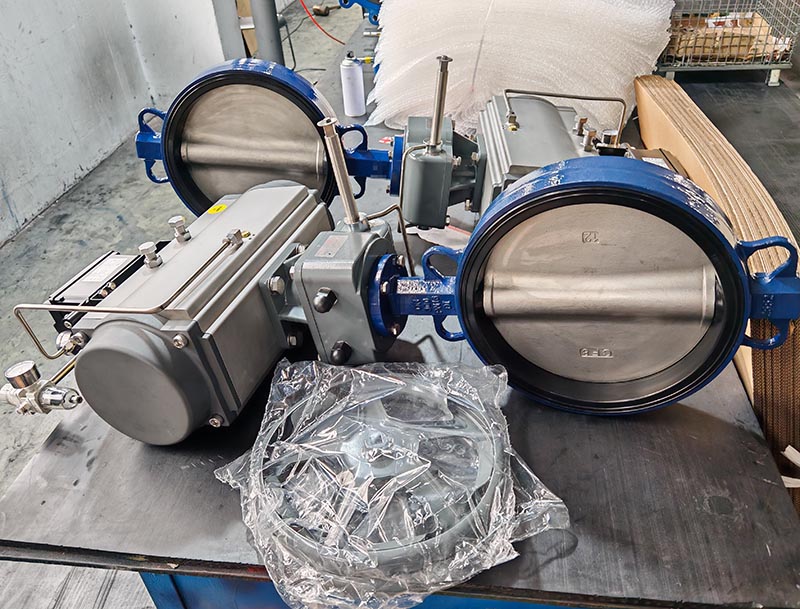
A dual-actuator wafer butterfly valve refers to a butterfly valve equipped with two independent operating mechanisms:
Pneumatic Actuator — Enables automated control via compressed air.
Worm Gear Operator — Enables manual operation via a handwheel.
(Note: The "wafer" style butterfly valve is a compact valve structure designed to be installed between two pipe flanges; we will not elaborate further on this specific design here.)
The dual-actuator design ensures that the valve can still be operated manually in the event of an air supply interruption or when the pneumatic system requires maintenance.
2. Key Components of the Dual-Actuator System
2.1. Wafer Butterfly Valve
The wafer butterfly valve features a lightweight and cost-effective structural design while offering reliable sealing performance, achieving a "zero-leakage" standard.
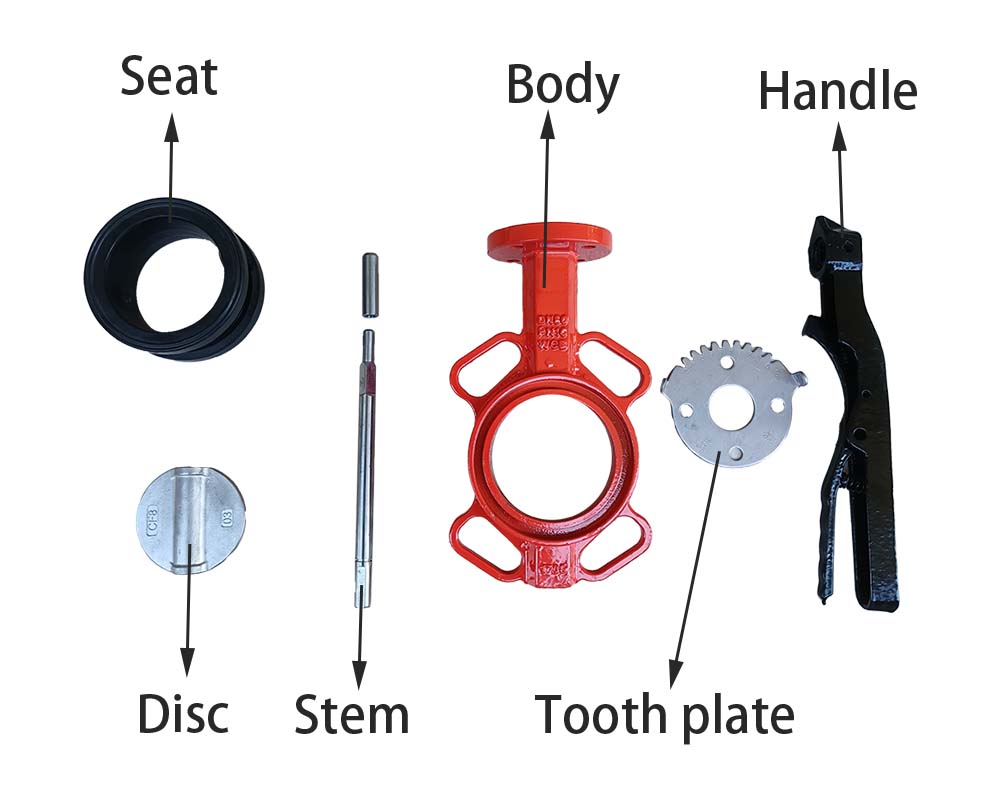
Its components include the standard body, disc, shaft, and seat.
2.2. Pneumatic Actuator
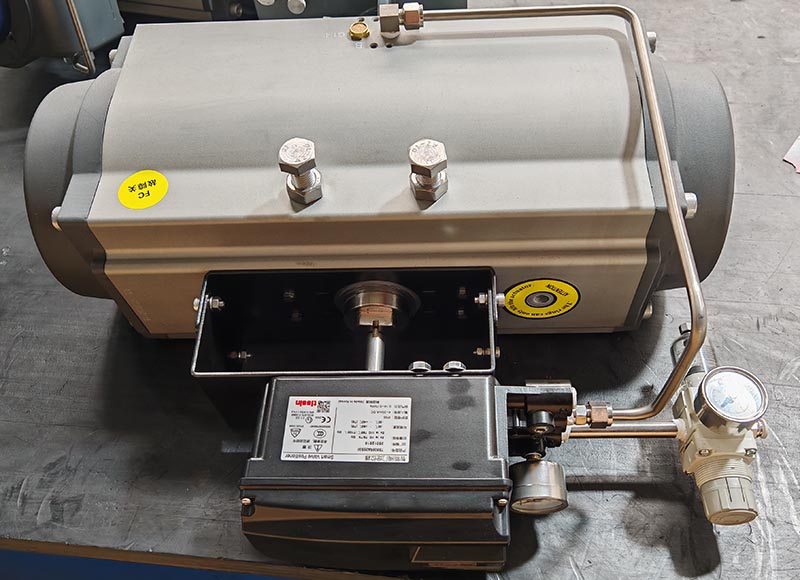
A pneumatic actuator utilizes compressed air—driven by pneumatic pressure signals—to convert pneumatic energy into rotational motion (outputting it in the form of torque). When compressed air enters the actuator, it drives the valve stem to rotate, causing the butterfly disc to turn 90 degrees, thereby opening or closing the valve. These actuators are classified into two types: double-acting and single-acting. When paired with quarter-turn control valves, they are suitable for applications requiring both flow regulation and on/off switching, as well as other applications involving rotary motion.
2.2.1. Selection of a Double-Acting Actuator:
First, determine the required torque for the valve. Under normal operating conditions, a safety factor of 15% to 20% is recommended.
Next, increase this safety margin further based on the specific fluid medium being handled by the valve. Add a 20% safety margin for clean, lubricating media;
Add a 25% safety margin for steam or non-lubricating liquid media;
Add a 40% safety margin for non-lubricating slurry media;
Add a 60% safety margin for non-lubricating dry gas media;
Add an 80% safety margin for non-lubricating particulate media;
Add a 100% safety margin for non-lubricating powdery media conveyed by gas;
2.2.2 Selection of Single-Acting (Spring-Return) Pneumatic Actuators:
When using a single-acting actuator, refer to the single-acting torque chart based on the calculated torque value and the available air supply pressure. First, locate the spring-return end-point value; then, locate the air supply working pressure end-point value. The torque generated by the air supply pressure must exceed the spring-return torque.
2.2.3 The reason pneumatic actuators are widely popular
The pneumatic actuated butterfly valve are extensively applied in automation control systems is due to the following characteristics:
Fast response speed;
Remote control capability;
Integrates seamlessly with PLCs or automated control systems;
Compatible with optional accessories such as positioners (feedback units), air filters (pressure regulators), solenoid valves (electrically controlled directional valves), etc.
2.3. Worm Gear Operators
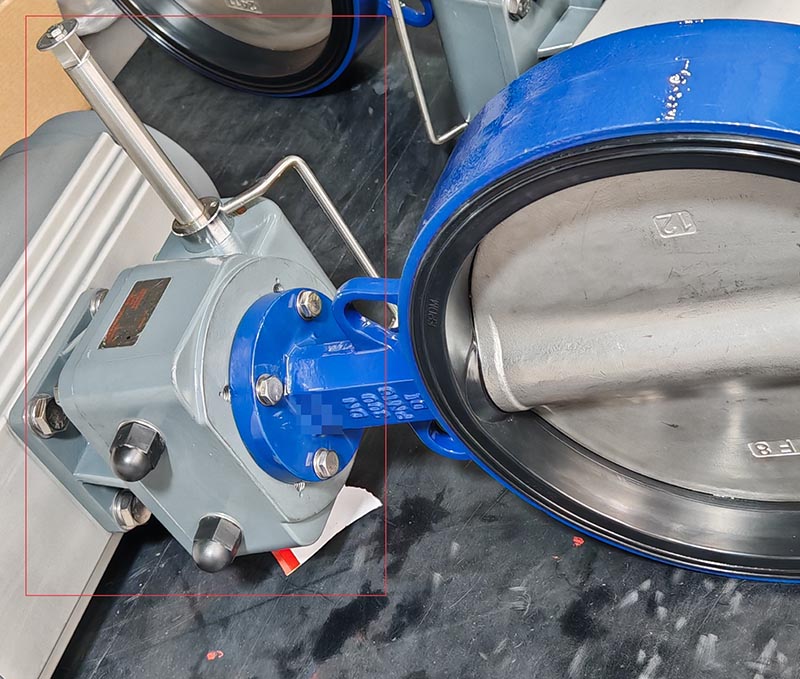
A worm gear operator is a speed-reducing transmission mechanism equipped with a handwheel, designed to facilitate the manual operation of valves.
Worm gear transmissions are characterized by their ability to amplify torque and reduce the operating force required. Consequently, they are particularly well-suited for valves with a nominal diameter (DN) of 300 or larger—especially large-bore valves—where the value of the worm gear mechanism is most evident. This mechanism allows operators to open or close valves with greater ease and enables them to determine the approximate opening position of the valve disc via a visual indicator.
3. Operating Principles
3.1 Pneumatic Operation Mode
Under normal operating conditions, the valve is controlled by a pneumatic actuator.
The operating process is as follows:
Compressed air enters the actuator chamber;
The actuator converts the air pressure into rotational motion;
The valve stem drives the butterfly disc to rotate 90 degrees;
The butterfly disc moves to either the fully open or fully closed position, thereby controlling the flow rate within the pipeline.
This mode is typically employed in automated industrial systems.
3.2 Manual Operation Mode
When the pneumatic air supply is interrupted or the system requires manual intervention, manual operation can be engaged:
Activate the worm gear operating device.
Rotate the handwheel to drive the worm gear shaft.
The worm gear mechanism drives the valve stem and disc to rotate.
In this way, the valve remains fully operational even in the absence of a pneumatic air supply.
4. Advantages of Dual-Actuator Butterfly Valves
-High Reliability
The dual-actuator structure ensures that the valve remains operational under any circumstances, even in the event of a pneumatic system failure.
-Enhanced Safety
In critical piping systems, the manual backup capability ensures that the system remains controllable during emergencies.
-Flexible Control Options
Operators can select the mode of operation as needed:
Pneumatic automatic control
Manual worm gear operation
This flexibility is crucial in complex industrial systems.
-High Torque Output
The worm gear mechanism is capable of generating substantial output torque, making it particularly suitable for large-diameter butterfly valves.
-Reduced Downtime
When the pneumatic system requires maintenance, the valve can continue to be operated manually, thereby minimizing system downtime.
5. Typical Application Areas
Dual-actuator wafer-type butterfly valves are typically deployed in industrial environments that require both automated control and manual backup capabilities.
-Water Treatment Systems
Widely used for flow control in municipal water supply networks and wastewater treatment plants.
-Power Industry
Applied in power plant cooling water systems and auxiliary piping networks.
-Oil & Gas Industry
Utilized in piping systems that require automated control while mandating the availability of a manual backup option.
-Chemical Industry
Suitable for various industrial fluid control applications, ensuring the operational reliability of the system.
-Fire Protection Systems
In emergency situations—even if the automated system fails—the valve can still be controlled manually.
6. Conclusion
The worm gear + pneumatic double actuator butterfly valve combines the benefits of automated control with the reliability of manual operation. By integrating both a pneumatic actuator and a worm gear operating mechanism onto a single valve body, the valve remains fully functional even in the event of a pneumatic air supply interruption.
For applications requiring remote automated control coupled with a manual backup capability, the dual-actuator butterfly valve represents an efficient and highly reliable solution.